Plant guide
Adenium obesum
Why plant parents love it
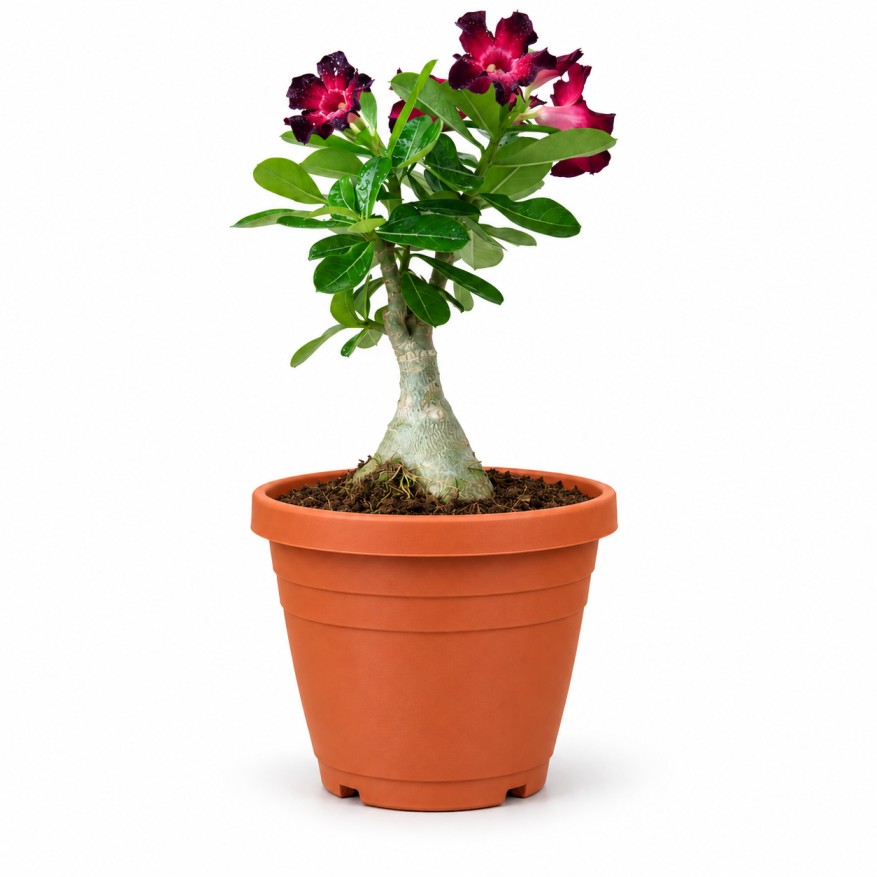
Adenium, commonly known as the Desert Rose, is a striking succulent plant famous for its swollen caudex (trunk) and vibrant, trumpet-shaped flowers. Native to arid regions, it naturally stores water in its thick stem, making it exceptionally drought-tolerant and hardy.
In Indian home gardens, Adenium is a highly prized bonsai-like specimen plant for bright balconies, sunny terraces, and garden spaces. Its architectural trunk paired with clusters of red, pink, white, or multi-shaded blossoms brings an exotic tropical charm to any sunlit corner.
This resilient plant thrives in the intense heat of Indian summers, requiring minimal intervention to reward plant parents with spectacular, long-lasting blooms throughout the warmer months.
Ready to grow with CareMyPlant?
Shop a healthy specimen, then unlock care reminders and Plant Doctor support in your garden.
Water
Keep the rhythm simple
Water thoroughly only when the soil is completely dry. Reduce watering significantly during monsoons and winter dormancy.
Light
Find its happy spot
Requires 5 to 6 hours of direct, bright sunlight daily for strong caudex development and abundant flowering.
Soil
Roots that breathe
Extremely well-draining succulent soil mix containing sand, perlite, pumice, and gravel with minimal compost.
Feed
Gentle growth fuel
Feed with a balanced NPK or high-potash organic fertilizer every 3–4 weeks during spring and summer. Stop feeding in winter.
Pro tips
Small habits that keep Adenium Desert Rose looking shop-fresh at home.
Shop the look
Live plants linked to this guide — healthy stock, ready for your space.
Stay ahead of trouble
Adenium Caudex Rot
criticalAdenium Caudex Rot is a severe fungal or bacterial infection that attacks the water-storing swollen trunk (caudex) of the Desert Rose plant. Driven primarily by waterlogging and fungal pathogens like Fusarium or Phytophthora, this condition rapidly breaks down the internal plant tissue, converting a solid trunk into a soft, mushy mess. Beginners often notice the issue when the stem yields under gentle pressure or when healthy leaves suddenly turn yellow and drop off en masse. Left untreated, the decay travels upward into the branches and downward into the feeder roots, leading to the total collapse of the plant in a matter of days. In Indian homes, this condition spikes during the heavy monsoon rains and cold winter periods. High ambient humidity combined with compact, clay-heavy garden soil or pots without adequate drainage holes traps moisture around the base, creating ideal conditions for stem rot.
Keep exploring
More plant profiles to help you build a thriving indoor jungle.
Next step
Shop curated stock, register it in your garden, and get care reminders tailored to this species.